


The hi-fi system is an eclectic product category that varies wildly in form factors, features and, of course, prices. You have all-in-one microsystems complete with speakers; pairs of integrated stereo speakers housing everything you need; or single boxes of streaming, CD- or vinyl-playing electronics to which speakers must be added. Whichever option you go down will save you money, space and a fair bit of time and effort when compared to building a ‘separates system’ (where every component – source, amplifier and speaker – is in a separate box).
Every kind of hi-fi system is covered on this page in our top 10 picks as well as our Also Consider section, but they all have one thing in common: class-leading performance at their price. Of course, with an ever-increasing number of boxes to tick in the features departments, they all combine best-in-class functionality with attractive designs and intuitive control too.
We review hi-fi systems across the market, and each that passes through our doors is tested against its closest competitors and under strict criteria so we can confidently name the best of the best. Naturally, only those who come out of them with flying colours make it into this buying guide.
The quick list

The Award-winning M41DAB is an awesome piece of kit at a fantastic price, boasting excellent sound quality and great flexibility.
Read more

In the market for a compact speaker system packed with streaming smarts? These surprisingly sophisticated entry-level KEFs should top your wishlist.
Read more
If you have the money, this Award-winning all-in-one stereo speaker system is both innovative and entertaining, with clean, punchy sound and all-encompassing connectivity.
Read more
Load the next 3 products ↴
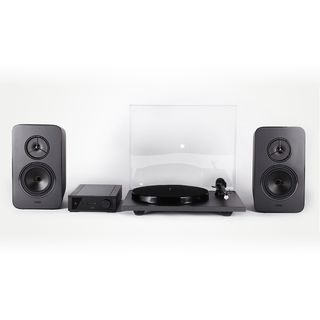
Want a great place to listen to your records without a fussy setup? If so, the System One is still the entry-level setup to beat.
Read more
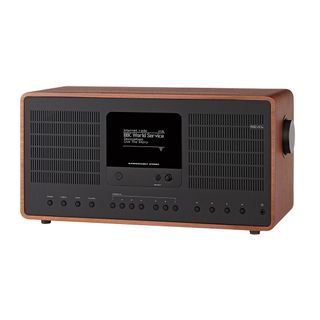
The handsome, retro-modern SuperConnect Stereo is feature-packed, super-sounding and a pleasure to use.
Read more
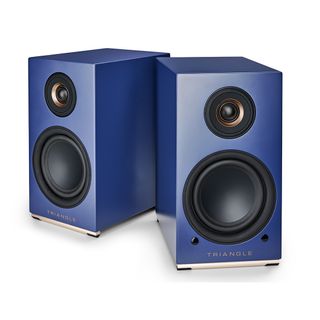
These Award-winning desktops are compact, elegant and versatile, all while offering enthusiastic and competent sound Highly recommended.
Read more
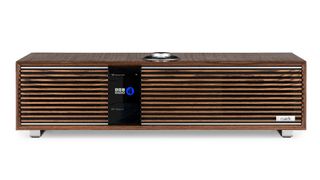

A flexible, function-rich and great-sounding system that somehow manages to be a good-looking piece of furniture at the same time.
Read more
July 2024: No new entries, with the recently reviewed Roksan Attessa Streaming Amplifier impressing but ultimately not enough to muscle in between the Technics and Naim network amps on this list.


I’m the managing editor of What Hi-Fi? and, with over 10 years of experiencing in reviewing hi-fi, have seen first-hand the hi-fi system category evolve into what it is today. Now smarter than ever and with fewer compromises than before in the sound department, the integrated systems you see below are fantastic ways of obtaining proper hi-fi sound without needing to go the whole hog and set up a purist separates system.
Best microsystem
Image 1 of 2
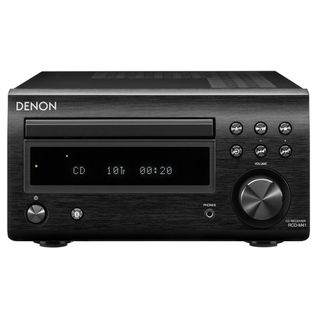
The default budget all-in-one system choice for years, this Denon multi-Award winner is still at the top of its game, so much so we’re yet to really find anything of its type that can outdo it at a similar price.
You can buy the D-M41DAB with or without Denon’s own speakers. Without, the system is called RCD-M41DAB and can be found online for under £250 / $350 / AU$500. The speakers are dubbed SC-M41; put the two together and you have the D-M41DAB. Indeed, we’d happily recommend Denon’s speakers if you don’t have your own already.
The inclusion of Bluetooth (which can be turned on or off to avoid affecting the D-M41DAB’s overall performance) is cause for celebration, as is the superb sound quality. In terms of performance, this system could hold its own against groups of separates at a greater cost, with a graceful, insightful and expressive sound.
“The combination of low-end stability and dynamic sensibilities leaves us with a remarkably human performance for a hi-fi system at this price,” our in-house experts penned in our D-M41DAB review.
Microsystems may seem like a dated concept nowadays, but this Denon proves that they can still be a perfect route to convenience and great-value sound; a way to get true stereo room-filling sound that a one-box system can’t always deliver. A truly remarkable system for the money.
Read our full Denon D-M41DAB review
Best budget speaker system
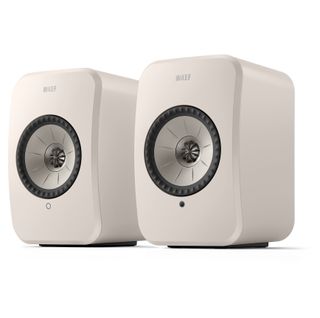
KEF’s LS50 Wireless II (below) and more recently launched LS60 Wireless stereo speaker systems have stolen a lot of headlines in recent years, but we shouldn’t forget there is actually a third and fourth member of KEF’s wireless speaker system family – the LSX II and, the cheapest and newest of them all, the LSX II LT we have here.
The LSX II arrived as essentially a more modest, miniature member of the clan, pretty much perfect for smaller rooms, and now this LT version has made it even more accessible by bringing the price down without cutting many corners.
The stereo speaker system still delivers much of what has made the KEF LSX II a two-time What Hi-Fi? Award winner, including the very same musical, detailed sound (our reviewers said that it “shares the same sonic credentials as the LSX Il, with almost no sonic shortcomings when the two are directly compared side-by-side”) and generous streaming features. It simply drops the option of a wireless link between the speakers, the aux input and a few colourway options, while lopping £300 / $400 / AU$500 off the price.
The KEF LSX II LT is therefore a fantastic value alternative to the more illustrious, expensive LSX II. By taking a great system and streamlining it without compromising the sound, KEF has nailed it once again.
Don’t want to spend quite so much? The Triangle Twin AIO, found below, are a fantastic bargain desktop system at an extremely attractive price.
Read our full KEF LSX II LT review
Best premium speaker system
Image 1 of 7
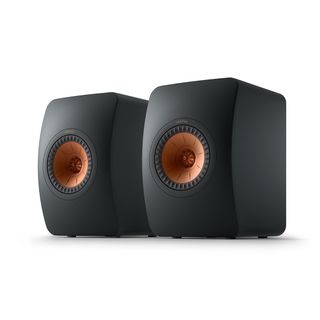
The follow-up to the outstanding KEF LS50 Wireless speakers improves on greatness – no easy feat, even for an audio brand as surefooted as KEF.
While the recent release of the more expensive JBL 4329P (£3499 / $4500) and the (also more expensive) KEF LS60 Wireless (£2250 / $2499 / AU$4295) has muddied the waters somewhat, we still favour the LS50 Wireless II as being premium class leaders that don’t make quite such a hefty dent in your finances as their aforementioned rivals.
Like their illustrious predecessors, the LS50 Wireless II serves as a superb all-in-one system (streaming and amplification are built-in) by dint of their advanced connectivity. Improvements include upgraded components and a new KEF Connect app where you can access the likes of Tidal, Qobuz, Amazon Music and Deezer. Not that you’ll need to reach for any of the aforementioned apps; these speakers are capable of streaming via AirPlay 2, Google Chromecast and Bluetooth, and are also Roon Ready.
KEF’s striking design is matched by stunning sonics, enhanced by refreshed Uni-Q drivers and KEF’s all-new MAT absorption technology. The presentation is spacious and the addition of MAT can be heard in the refined treble and clean mids.
Quite simply, if you’re in the market for a high-fidelity all-in-one system packed with streaming smarts, this sophisticated sequel should top your list.
Read our full KEF LS50 Wireless II review
Best high-end speaker system
Image 1 of 4
It’s still the case today that all-in-one systems generally don’t tend to perform as well as the best separates systems totalling similar amounts. However, such space-efficient, convenient, do-it-all designs are improving sonically by the year and becoming all the more compelling for it. Case in point: the JBL 4329P Studio Monitor.
These are speakers that sound more or less as they look. They do everything to capture our attention as we play Pink Floyd’s Time, conveying the size and scale of the track’s atmospheric soundscape while ensuring every instrument has the room, clarity and texture needed for its role to be fully appreciated in the mix. Bass is impressive, both in terms of quantity and quality. But these aren’t one-dimensionally big and boisterous; detail and dynamic expression are in ample supply here.
That the JBL are so versatile, not only in terms of connectivity and placement, while managing to sound so mature, is a testament to JBL’s persistent efforts in speaker design and electronics, and a milestone in all-in-one speaker systems of this kind and at this price. Will the sonic sacrifice inherent in choosing all-in-one designs over separates systems always exist? Probably, but the once-wide gap is certainly getting narrower.
Read our full JBL 4329P Studio Monitor review
Best budget streaming amp
Image 1 of 7
The SA-C600 really is a well-equipped streaming amplifier, to which you just need to add speakers. Technics has seen fit to include a CD player alongside the more usual network streaming capabilities with up to 32-bit/384kHz file compatibility.
There is support for Spotify Connect, Tidal, Deezer and Amazon Music, as well as DAB/DAB+ and FM radio. You also have a choice of Bluetooth, Chromecast and AirPlay 2 in addition to a raft of physical analogue (stereo RCA) and digital connections (USB Type A, USB Type B, coax and optical). Note that there is also a moving magnet phono stage allowing you to add a turntable – which makes sense given the brand’s strong connection to record player manufacturing.
Often, such systems are all about looks and features, but Technics has shown that it is possible to add great sound into the mix. “It’s an expressive and punchy performer that builds its performance around a solid framework of surefooted rhythmic drive and expressive dynamics,” said our expert reviewers in our SA-C600 review. “Details levels are good, but it is the confident way this unit organises that information into a cohesive and musical whole that really impresses.”
It’s a really well-conceived product and fully deserves its What Hi-Fi? Award win, even with tough competition from the similarly outstanding Marantz PM700N (£999 / $999 AU$1999) and the Bluesound Powernode (£849 / $899 / AU$1599).
Highly recommended.
Read our full Technics SA-C600 review
Best premium streaming amp
Image 1 of 5
To describe the multi-award-winning Uniti Atom as a streamer would be akin to describing Wagyu beef as sustenance. From the coffee-coaster volume dial on the roof – the pleasure of spinning it is almost enough in itself to justify buying this system – to its full-colour LCD front panel display exhibiting album art as it plays, Naim has nailed a gorgeous aesthetic for its premium streaming amplifier.
All you need do is add a pair of suitable hi-fi speakers – Naim promises 40W per channel at 8 ohms, so a pair of £1000/$1000/AU$2000 standmounters, say, would be ideal. Once you’ve soaked up the delicious design cues, you’ll be wowed by the Atom’s performance – levels of clarity and insight and truly exceptional – as well as its connectivity. Google Chromecast, Tidal, Spotify Connect and Internet radio are built-in, with further wireless connection available via AirPlay and Bluetooth aptX HD. You can also play music stored on a USB stick.
All in all, the talented Uniti Atom is everything we’ve come to expect from Naim. A superb blend of lifestyle product and premium hi-fi – as it’s consecutive What Hi-Fi? Awards every year since 2017 go to show. For our money, the Uniti Atom remains the finest premium streaming amp at this level.
Read our full Naim Uniti Atom review
Best turntable system
Image 1 of 8
If you’re after a simple-to-use vinyl set-up that’s a great deal of fun to listen to, this Rega system is a great place to start.
The three-product turntable system under our noses here is the entry-level Rega System One, comprised of two What Hi-Fi? Award winners – namely Rega’s excellent Planar 1 turntable and integrated io amp – and the company’s Kyte stereo speakers.
You can get a slightly more sonically transparent combination by swapping out the Kytes for something like the Dali Oberon 1, but that doesn’t mean this all-in-one triple-threat option isn’t a very good one. Its keen, zealous musical presentation especially makes it a great bet for those of us who like their music with plenty of vigour and spice.
Judged as a complete package, the System One gets the basics of music reproduction spot-on, delivering musical cohesion and dynamic expression in a way that eludes most alternative set-ups. Comprehensive, easy to set up and surprisingly compact in terms of what you actually get, this is a great way to get yourself a really solid hi-fi setup without tearing your hair out in the process.
Read our full Rega System One review
Best radio system
Image 1 of 11
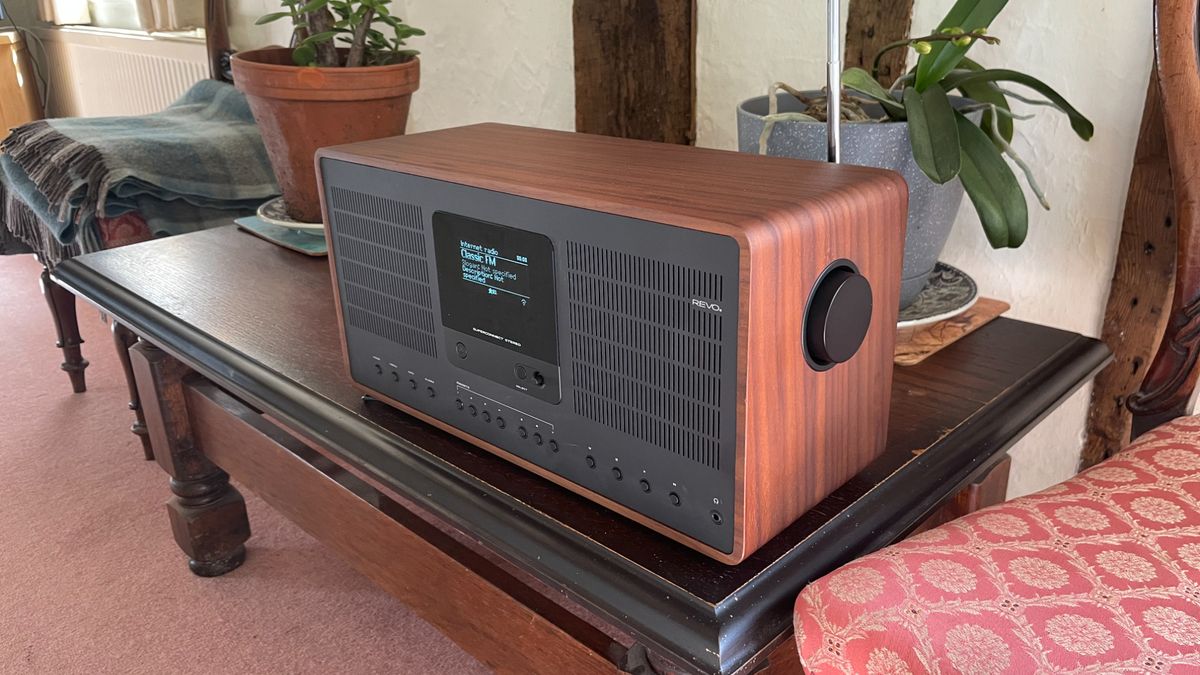
A modern radio often needs to be a jack-of-all-trades while retaining the signature look, feel and function of a classic piece of tech in order to survive in its own particular market niche. That’s exactly what Revo’s original SuperConnect delivered with its feature-packed original model back in 2014, and then ten years later the brand’s sequel arrived with more stations, more streaming support and, crucially, stereo sound.
It also looks great – “retro with a dash of modern”, as we described its aesthetic in our SuperConnect Stereo review – and is made to a supremely high standard. It might be slightly on the large side for a product of this type (18 x 36 x 15cm) but packs a lot of features and sound quality into its dimensions. In our testing, we praised its “cohesive, musical package” and “an unexpected amount of space and depth.”
What’s more, it’s highly competent at everything it does, be it streaming, internet radio access or just sitting in your home looking sexy.
Revo’s long-awaited sequel has been worth the wait; it’s easy-to-use, fantastic to look at and a pleasure to listen to, and while it may sport a vintage aesthetic, nothing about the SuperConnect Stereo feels remotely out-of-date.
Read our full Revo SuperConnect Stereo review
Best desktop system
Image 1 of 5
The Triangle AIO Twin is an all-in-one stereo speaker system akin to the superb KEF LSX II LT (above) but at a more modest price. Its price and feature offering were enough to pique our interest: music systems that integrate all amplification, connectivity, streaming and more features into one box or a pair of speakers are an increasingly neat and attractive way to get hi-fi sound into your home, but not many are this accessible.
Not only are they lifestyle-friendly (not everyone has space for so many separate boxes), but their feature set means you can play just about anything through them.
And that’s the case with the versatile Triangle AIO Twin: it may look like a pair of ‘normal’ speakers, but this a fully-fledged, versatile music system in its own right, with a whole host of features and a level of performance that makes for quite the bargain at this price point.
Bluetooth, internet radio, streaming service access and physical connectivity (including a turntable MM phono input) are all present and correct, while they sound, in the words of our expert reviewers, “incredibly fun to listen to”.
“We want to keep on listening to the Triangle AIO Twin,” concludes our AIO Twin review, “…and that’s the best recommendation we can give to someone looking for a neat, elegant system that does it (nearly) all.”
Read our full Triangle AIO Twin review
Best all-in-one system
Image 1 of 5
The single-box Ruark Audio R410 is a success, to a lesser or greater extent, in every respect. As an object, a piece of furniture, it’s gorgeous and, quite simply, brilliantly realised. As a flexible, function-rich piece of audio equipment, it is hard to find fault with (except for the absence of a dedicated control app). And in terms of the sound it makes, there’s an awful lot to like, not least its eloquent, direct and balanced presentation – and next-to-nothing to take issue with. While it may only be one box, “‘Room-filling’ is not too mild a description of its talents where out-and-out volume is concerned,” notes our R410 review.
The R410 has more features than you’ll probably need onboard – Bluetooth 5.1, wi-fi and UPnP, the ‘Connect’ versions of Spotify and Tidal, Apple AirPlay 2 and Chromecast. Ruark has a rich history with radios and so we can expect FM, DAB/DAB+ and internet radio to come as standard. There’s an aerial to facilitate radio reception on the rear of the R410, and that’s also where you find all the physical connections, including an HDMI eARC input that makes the R410 TV-friendly too.
Overall it’s a fearsomely competitive product, and represents money well spent.
Read our full Ruark Audio R410 review
Also consider
- KEF LSX II: While the KEF LSX II LT now sits in the place the older LSX II used to due to its performance parity and more affordable price tag, we can still heartily recommend the pricier model – not least for those who value a wireless (as opposed to wired) link between the two speakers.
- Elac Debut ConneX DCB41: If you want a super-affordable pair of powered speakers to which to easily play music from your phone and/or connect a hi-fi component, look no further. These five-star Elacs have aptX Bluetooth, USB (Type B), optical, HDMI and RCA/phono inputs – just no network streaming.
- Moon Neo Ace: Got a big budget? Lucky you, because you could own this slice of convenient hi-fi heaven. It’s an integrated amplifier with a DAC, streamer and phono stage. It has Bluetooth, wi-fi and internet radio too. All you need to do is add your favourite pair of speakers.
- Audio Pro C20: If you’re after a more affordable one-box wireless system than the Ruark and Revo in our list, the latest Audio Pro is a fantastic option that can do a lot of things, and do almost all of them very well indeed. It’s like a Sonos speaker – but better.
How to choose
So do you buy a microsystem? A just-add-speakers streaming amplifier? A vinyl system? Or a fully fledged stereo speaker system? It probably won’t surprise you to read that your decision will likely come down to two things: what sources you use, and what budget you have.
If your budget is limited to hundreds as opposed to thousands, your best bet is to consider either a complete stereo speaker system like the KEFs and Triangle above, or an entry-level streaming amplifier like the Technics with a separate pair of stereo speakers. That’ll ensure you have a complete music system in two or three boxes without breaking the four-figure barrier.
A bigger budget will open doors to better sound quality, and unless you are set on having everything within two cabinets, as the JBL system on this page offers, we’d recommend going down the streaming amplifier plus speakers route.
Spending more doesn’t necessarily get you more features these days, mind you – a budget system is just as likely to tick as many boxes as one five times the price. What you should do, however, is ensure you buy one that covers the sources you need. For example, if you want to connect a turntable, ensure it has a phono stage (unless you’re happy to buy an external one to connect via its RCA input). Only want to play vinyl, easily and affordably? Just buy a turntable system like the Rega. And what if integrated CD playback is a priority? Make sure your system has a built-in disc drive, as the Technics above does. Make a list of your desirable features, and see which recommended systems with them fit your budget.
Equally, be wary of buying a system with more features than you need, as you could be paying for them! If you don’t need network connectivity because you’ll primarily be connecting a turntable or using Bluetooth, look into a pair of active speakers or an integrated amplifier with Bluetooth instead.
Lastly, don’t forget to budget for extras, such as speaker stands and, if you need them, speaker cables.
Recent updates
- May 2024: No new entries, although the newly tested Audio Pro C20 all-in-one system has been added as an Also Consider for those looking for a mature one-box wireless speaker.
- March 2024: Swapped the KEF LSX II for the company’s new, more affordable LSX II LT. We added an ‘also consider’ section to give readers more options, too.
How we test hi-fi systems
Here at What Hi-Fi? we review hundreds of products every year, including plenty of hi-fi systems, and in our dedicated, state-of-the-art testing facilities in Reading and London, where our expert reviewers do all of our in-house testing.
Collectively, the What Hi-Fi? team has more than 150 years experience of in reviewing, testing and writing about consumer electronics. Our strict criteria and unique listening room environment give us complete control over the testing process, ensuring consistency and scrutiny within an industry-leading context of every core field in hi-fi.
All hi-fi systems are tested in comparison with rivals in the same price category, so when a new one comes along it will be listened against the most similar What Hi-Fi? Award winner or five-star competitor in the field. All review verdicts are agreed upon by the team as a whole rather than a single reviewer, too, helping to avoid individual subjectivity. That’s why our reviews are trusted by retailers, manufacturers and shoppers alike.
Every category of product we test has a Best Buy buying guide like this one, and only the top products feature in them. So if you take the plunge and buy one of the products recommended above, or on any other Best Buy page, you can rest assured you’re getting a What Hi-Fi?-approved product.
You can read more about how we test and review products on What Hi-Fi? here.
MORE:
Need expert advice? Here’s how to build the perfect hi-fi system
Splash out on today’s best hi-fi deals
Our pick of the best hi-fi speakers for every budget
Today’s best deals
link