
Sudden move to encrypt law enforcement radios in Brazos County raises concerns about transparency, public safety
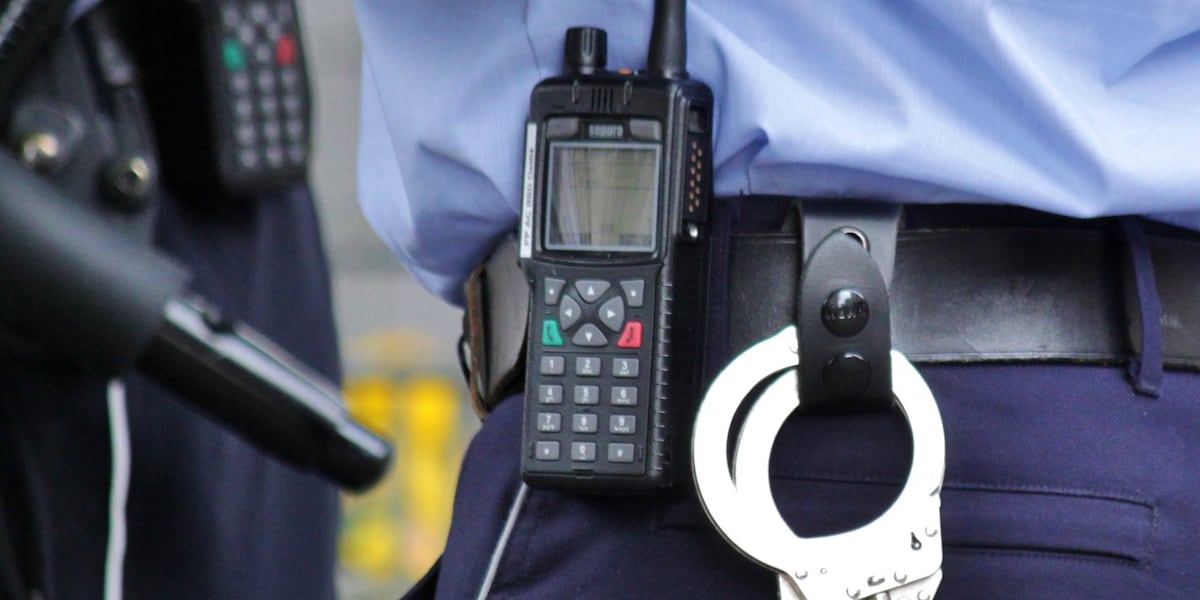
BRYAN, Texas (KBTX) – Multiple law enforcement agencies across Brazos County have fully encrypted their radio communications, a move implemented Monday without prior public discussion, notice, or community input. The sudden change will significantly reduce transparency, delay urgent information to the public, and limit the media’s ability to independently monitor public-safety activity.
KBTX first learned of the decision through a news release sent Monday evening by Bryan Police Public Information Officer Seth Waller, who clarified that fire department radio channels are not currently included in the switch. Agencies now encrypted include College Station Police, Bryan Police, the Brazos County Sheriff’s Office, Texas A&M University Police, and the Texas Department of Public Safety.
Why Agencies Say They’re Encrypting
In a joint statement to area newsrooms, officials said encryption is necessary to prevent criminals from monitoring police activity. However, agencies have long encrypted communications during sensitive operations — such as SWAT responses, warrant services, or in-progress violent crimes — where operational security is essential.
The decision to encrypt all routine channels goes far beyond those established practices.
Strong Opposition From Journalism and First Amendment Groups
Professional journalism organizations, including the Radio Television Digital News Association, First Amendment Coalition, and Reporters Committee for Freedom of the Press, warn that full encryption removes a critical oversight tool for both the press and the public.
These groups say open radio access is essential for:
- Rapid response to breaking news
- Real-time monitoring of public emergencies
- Independent verification of official information
- Accountability during major or controversial incidents
Total encryption erodes the public’s right to know and access government information, creating a model for less transparency across agencies, according to RTDNA.
“We do not want to jeopardize officer safety or listen to private medical information about identifiable individuals on police scanners. We, like police departments across America, want to keep our communities safe and informed, but encrypting police communications has the opposite effect – harming government transparency and impeding the public’s access to information,” said RTDNA President and CEO Dan Shelley in a 2023 report.
“These communications provide individuals and newsrooms with essential updates on issues happening in their communities, such as violent crime, hazardous conditions, or officer-involved shootings. The move to encrypt police scanner communications puts the public – and the newsrooms that serve them by seeking and reporting the truth – at risk,” said Shelley.
Impacts Reach Far Beyond the Media
Public radio traffic has historically alerted residents and community responders to immediate threats long before official alerts were issued, including active shooters, hazardous material incidents, major fires, severe-weather rescues, and missing-person searches.
Others who rely on scanners for situational awareness include:
- Volunteer fire departments
- Storm spotters
- Tow truck operators
- Off-duty responders
Without alternative access, these groups could face slower response times unless provided with costly encrypted radios.
Transparency Concerns and Delayed Communication
With real-time transmissions now inaccessible, journalists and the public must rely solely on public information officers from individual departments for incident information — even though PIOs are not always immediately reachable during fast-moving situations.
KBTX and other newsrooms already maintain strict policies that prevent releasing sensitive or unverified scanner traffic. Leaders argue that encryption does not stop irresponsible sharing by individuals online but does hinder credible reporting.
Agencies say transparency will instead come through daily activity logs, press releases, and public records requests. However, these methods often take hours or even days to produce, far slower than real-time radio updates.
“If you’ve ever worked in a newsroom, you know how important the police scanner is to covering a community,” Chip Stewart, a media law professor at Texas Christian University, said in a 2019 report by Columbia Journalism Review.
“You can’t get out to cover something if you don’t know it’s happening, and journalists would be at the mercy of police public information officers. Do we want the first draft of history dictated by police PIOs?”
Law enforcement agencies in Brazos County have mixed policies regarding staffing public information officers, but none employ more than one full-time PIO to handle media inquiries. In several cases, those officers hold additional responsibilities, including regular field shifts outside standard business hours, which dramatically slow or halt responses in some situations.
Other transparency safeguards touted in the county-wide release, including public daily activity logs, are not maintained under consistent policy across departments, and publication of incidents can sometimes be delayed for days based on when reports are completed and filed.
Risk of Increasing Misinformation
Media and First Amendment advocates warn that the change may unintentionally worsen misinformation.
When official communication slows during emergencies, speculation quickly fills the void. Without open radio traffic, the public may turn to unverified social media posts or rumors as they wait for updates, which often are released only after an incident has already unfolded.
News outlets fear this will do the opposite of what agencies say encryption is intended to prevent: confusion and uncertainty.
Cost and Lack of Alternatives
Monday’s announcement did not disclose the cost of implementing encryption across multiple agencies, nor any details about how the agencies arrived at the coordinated decision. In other regions, such transitions have cost anywhere from hundreds of thousands to several million taxpayer dollars.
Across the state, such transitions have generally been handled with advance notice and discussions with community stakeholders. Many communities that have adopted encryption have included transparency safeguards, such as:
- Providing media with receive-only encrypted radios
- Offering online dashboards of active calls
- Keeping routine dispatch channels open while encrypting tactical channels
- Streaming audio with a built-in delay
No such options were offered in Brazos County.
How You Can Help
Now that KBTX has lost access to real-time radio communications, it’s more important than ever for you to report breaking news in your neighborhood to us. If you see news happening in your neighborhood, you can email us at [email protected] or call the KBTX newsroom at 979-268-1497.
You can upload photos and videos to this link.
What Comes Next
Law enforcement officials say the move will modernize communications and better protect sensitive information. But media advocates, transparency groups, and public-safety experts worry the change will make it harder for citizens to know what is happening in their own neighborhoods, particularly during rapidly unfolding emergencies.
This is a developing story, and KBTX will continue pressing for answers about cost, implementation, and pushing for the addition of transparency measures.
Copyright 2025 KBTX. All rights reserved.
link
:quality(100) "5 Takeaways on Secure Communications from CGE Radio’s Conversation with BlackBerry")