Business Leaders Are Shaping Culture by Rethinking Virtual Communication
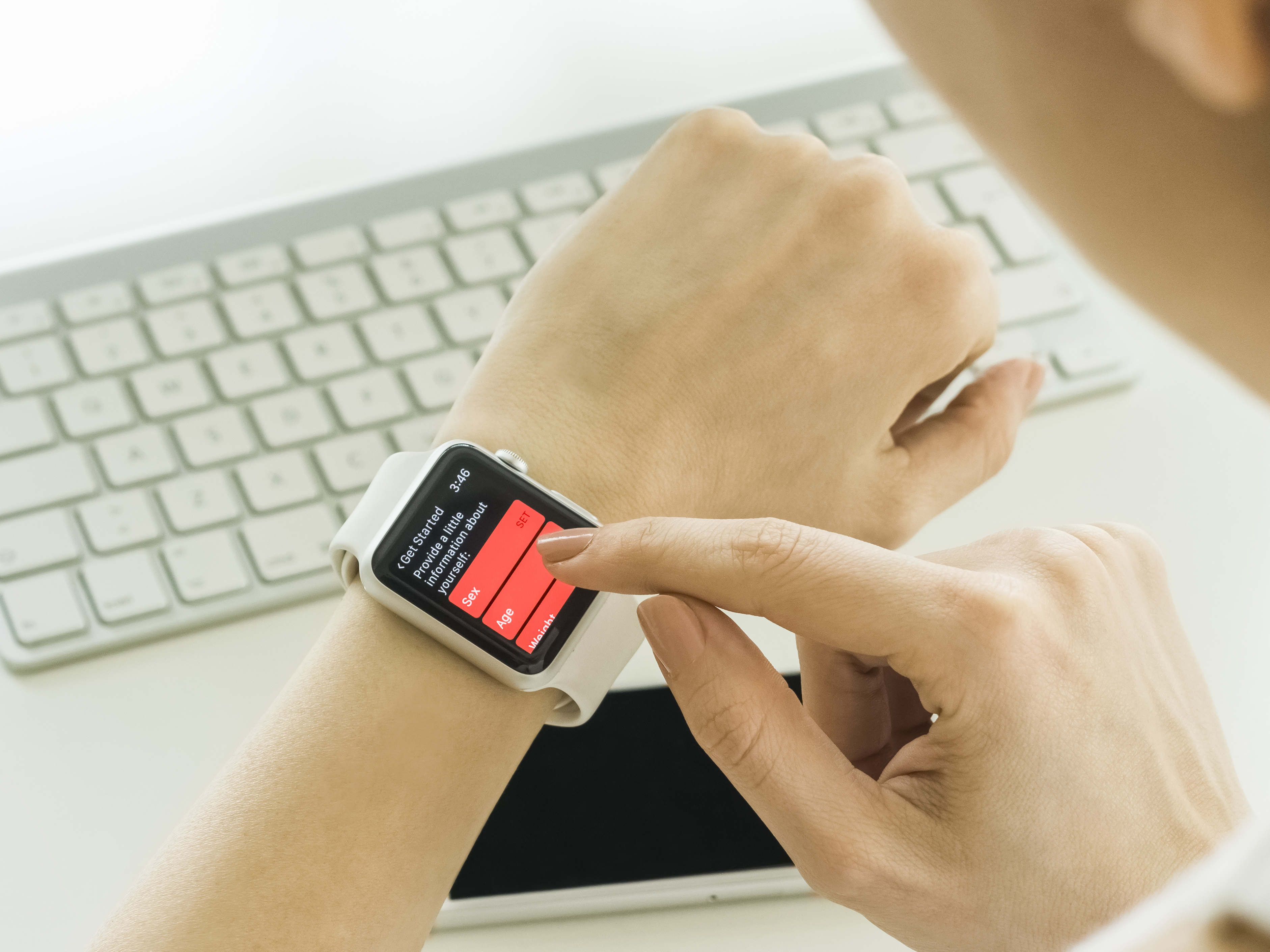
Online communication is typically more informal and meant for friendly interaction, but in a world of increasing hybrid and remote work, virtual communications play an important role in leadership strategy and any employee’s ability to get along with their peers and managers.
“Humanity has, by most measures, well over 100,000 years of interacting in person. If you think about the scale of human history, these technologies are new, and they’re dynamic and adapting. So just understanding how to do this better is something that could benefit everybody,” Andrew Brodsky, management professor at the University of Texas and author of Ping: The Secrets of Successful Virtual Communication, told Newsweek.
For business leaders, their personal brand and department’s culture is now partially contained in online platforms such as Slack, Zoom, Teams or Jira. Some companies are expanding into podcasts and video updates, and working hard to make them engaging.
In the more traditional forms of online co-worker communication, such as email and instant messaging, smartphones have given us 24/7 access to those channels, for better or worse. Even when people are in the office, they still are likely to be sending emails and instant messages to co-workers.
“Communication technologies have given us a lot more freedom about when we communicate and where we communicate from, but it cuts both ways in that now we’re expected to communicate all the time from everywhere and constantly be accessible, and that can lead to burnout,” Brodsky said. “This can reduce performance or increase turnover. So all these things are important, to make sure that we get our communication right.”
Brodsky, along with other researchers and business leaders interviewed for this article, said that managers should also consider developing guidelines for decorum and responsible behavior in virtual channels. With employee morale in decline, some might even say it’s in crisis, better and more sophisticated virtual outreach can make a profound impact on retention and culture.
“We need to be really thoughtful about the social norms we create in virtual interaction,” Adam Grant, a Wharton professor who actually had Brodsky as an undergraduate student at the University of Pennsylvania, told Newsweek. “We need to think about the kinds of disincentives that exist for people to treat each other poorly in face-to-face interaction, and make sure that those are mirrored in virtual interactions.”
A New Opportunity
Internal communications teams concerned about employee engagement are finding the new environment to be different than the pre-pandemic environment, where they had the office as a centerpiece to their strategies.
“A lot of organizations are still learning how best to engage and create experiences online and virtually that work well for employees,” Chris Lee, vice president of the employee experience and internal communication practice at Gallagher, an insurance and risk management consulting firm, told Newsweek.
With the employee “audience” moving online, Lee sees an opportunity to deliver “consumer-grade experiences,” including richer media, discussion topics outside of work and higher production quality in order to draw employees’ interest into announcements and vital company information.
For example, Lee shared that podcasts have had a high rate of effectiveness, according to Gallagher client surveys.
“Podcasts can be looked at as being quite effective because they offer more of an organic environment where you’re not just going straight into business as usual,” he explained.
Employers can also segment their internal communications’ strategies by department or geography and think about unique ways to engage those specific groups. They’re also using online channels to bolster communication and access around benefits, learning and development opportunities, and helping people reach personal goals.
“Creating more relevant and meaningful interactions with employees that meet employees where they’re at is something that, with today’s technology, every employer should be able to do better, in terms of having communications that work best at the individual level,” Lee said.
Getty Images
Building Blocks of Leadership Communication
Whether business leaders like it or not, the majority of how they are viewed by a lot of their colleagues, especially at larger organizations, is now coming via email, video chat, communication within collaborative platforms and other instances of working together.
“We still find that the most used channel continues to be email, which if an organization is really good and their communications team is good, isn’t necessarily a problem, if they have a communications plan and strategy, they’re thoughtful about the quality of the content and the ways that they deploy it,” Lee said.
Embracing new channels of communication, like video or podcasts, can help employers find more salient topics to discuss with employees, including financial advice or guidance on taking better advantage of the company benefits package.
“[Video or podcasts are] a great platform for great content about mental health. It’s a great platform for talking about tips for saving for your future and things like that and providing context for what [benefits] mean to you as an employee in your own lives,” Lee said.
Lee also pointed out that many leaders don’t see communication as a crucial skill for their job or simply don’t possess the skill after being promoted into management for being a high performer. Perhaps in some sectors pure talent rules the roost, but most leaders at mature companies have the responsibility of communicating goals, standards and company announcements or strategy decisions, and their ability to make that clear to the whole organization is critical to their financial success.
“The way we lead is through our communication, and that’s how others perceive it,” Brodsky said. “You could be, in theory, coming up with great initiatives as a leader, but if you don’t communicate them well, and you don’t interact with the people underneath you well, it will undermine everything you’re doing altogether.”
This includes thinking about the ideal amount to be communicating to employees. Brodsky shared that it can be hard to determine the right amount of outreach, but it is better to over-communicate, as “under-communicating is punished a lot more heavily for leaders than over-communicating,” he said.
Brodsky added that leaders can help everyone by setting standards for correspondence and response times. For example, they can state that emails between colleagues should be answered in a certain amount of time, while also setting similar standards for the timing of things like Slack messages and video meetings, and they can also poll employees on their preferred online communication channels in order to better understand how they’d like to hear from leadership.
“By me asking you, it shows I care about your preference, and I’m willing to communicate the way you want to,” he explained. “You’re going to like me more, and you’re going to want to interact with me more as a result, because I’m willing to do it in the way that you’re most comfortable.”
Guidance for All
Anyone can improve virtual communication habits and styles at work and either save time or foster better relationships with peers, direct reports and higher-ups. Leaders who do a good job on virtual communication guidance and norms can also aid in their employees’ well-being.
For some, turning notifications off may be necessary. Brodsky recommends “chunking” daily communications—looking at email over two to three blocks per day in order to have more focused time, or looking at it briefly in between longer tasks. He also pointed out that even the presence of your phone in your line of vision can be a drain on focus and productivity.
Brodsky pointed out that typically people receiving emails tend to feel heavy pressure to respond quickly, so a sender letting the recipient know what kind of timeline they’re hoping for regarding an answer can go a long way.
“Recipients overestimate the degree to which the sender expects a response quickly,” he explained. “When the email sender includes a note that just says, ‘Hey, [it’d] be great if you get back to me in X days’ or whatever, that reduces stress of the email recipients. What I recommend in the book is having conversations amongst your team about the norms of responses.”
This approach can help avoid a lot of confusion and workplace stress. Even if it takes one minute to revert back to work after seeing an email and responding, that time can add up.
“People don’t have to check their inboxes constantly, they’re not checking their work email or instant messages after hours, because they know there’s a certain way that people get in touch if there is truly something that has to be answered after hours,” Brodsky said. “The problem is that when you leave it ambiguous, it causes stress. People are often overestimating the urgency of things unnecessarily.”
How well you communicate may also impact perceptions of your performance. Brodsky noted the phenomenon of input bias: Our tendency to believe that, between two presentations, the one that took more time to make is of higher quality.
“The filter between the person’s work and how managers perceive them is their communication. So this ends up being an incredibly important part of how evaluations are happening,” Brodsky said.
This Email Could Have Been a Phone Call
Now that virtual channels are part of the workplace, team leaders should rethink all of their processes to determine the best way to proceed, Brodsky advised.
“We tend to fall prey to in-person defaults, where we think in person’s best for almost everything,” he said. “We end up in a default where we just use whatever mode we’ve always used.…The problem is this mindless approach to communication results in hours and hours of wasted meetings, email chains that are way longer than they should have been, and it really ends up losing productivity.”
In some instances, being a better virtual communicator can mean picking up the phone instead of sending an email.
“Meetings that should have been an email, everyone understands that,” Brodsky said. “But there are so many emails that should have been a phone call or a meeting.”
link